
Prime Land Acquisition in Baja California Sur: A Strategic Investment Play for 2026
In Baja California Sur, land acquisition is not a speculative play—it is a positioning strategy.
Control of well-located land in early or mid-growth corridors defines who participates in the next cycle of value creation. Land is finite, entitlements are uncertain, and infrastructure arrives unevenly. Where these variables intersect, value is created.
Strategic Land Is Positioning, Not Speculation
In Baja California Sur, land is more than a passive asset. It is an instrument of strategic control. The investors who understand this market best do not simply buy property—they secure optionality before the market fully recognizes it.
When land sits in the path of infrastructure, demand migration, or zoning evolution, its value is no longer tied only to current conditions. It becomes a future-facing asset with asymmetric upside.
Why Land in Baja Works: Structural Drivers
Supply Constraint Is Structural, Not Theoretical
Coastal frontage, view corridors, and developable terrain are physically limited. Environmental regulations restrict usable land near the coastline, and large parcels are increasingly fragmented over time.
Scarcity in Baja is not a narrative. It is a measurable condition that directly affects pricing power and long-term land appreciation.
Demand Is External, Dollarized, and Persistent
Demand is driven primarily by U.S. and Canadian buyers seeking second homes, lifestyle migration, and long-term strategic positioning. This capital is not driven by local wage cycles or short-term regional consumption.
Because the buyer base is largely international and dollar-based, land demand in Baja California Sur tends to remain more resilient and investment-oriented than in many domestic secondary markets.
Infrastructure Lag Creates Entry Windows
In Baja, infrastructure typically follows demand rather than leading it. Roads, utilities, and services often expand only after early capital begins to define a corridor.
This creates one of the clearest value windows in the region: acquiring land before infrastructure maturity, but after the first signs of directional growth, often produces the strongest expansion multiples.
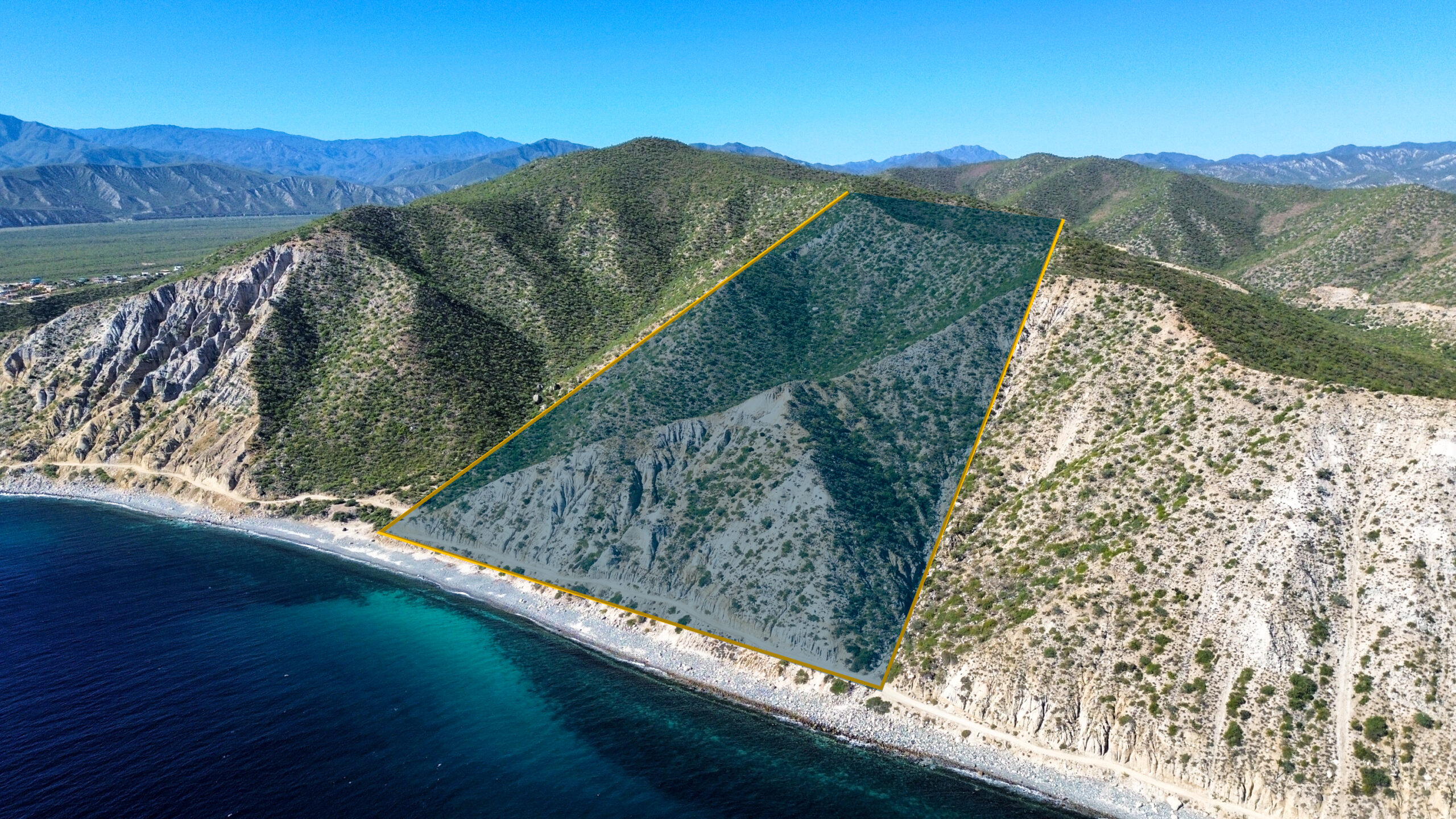
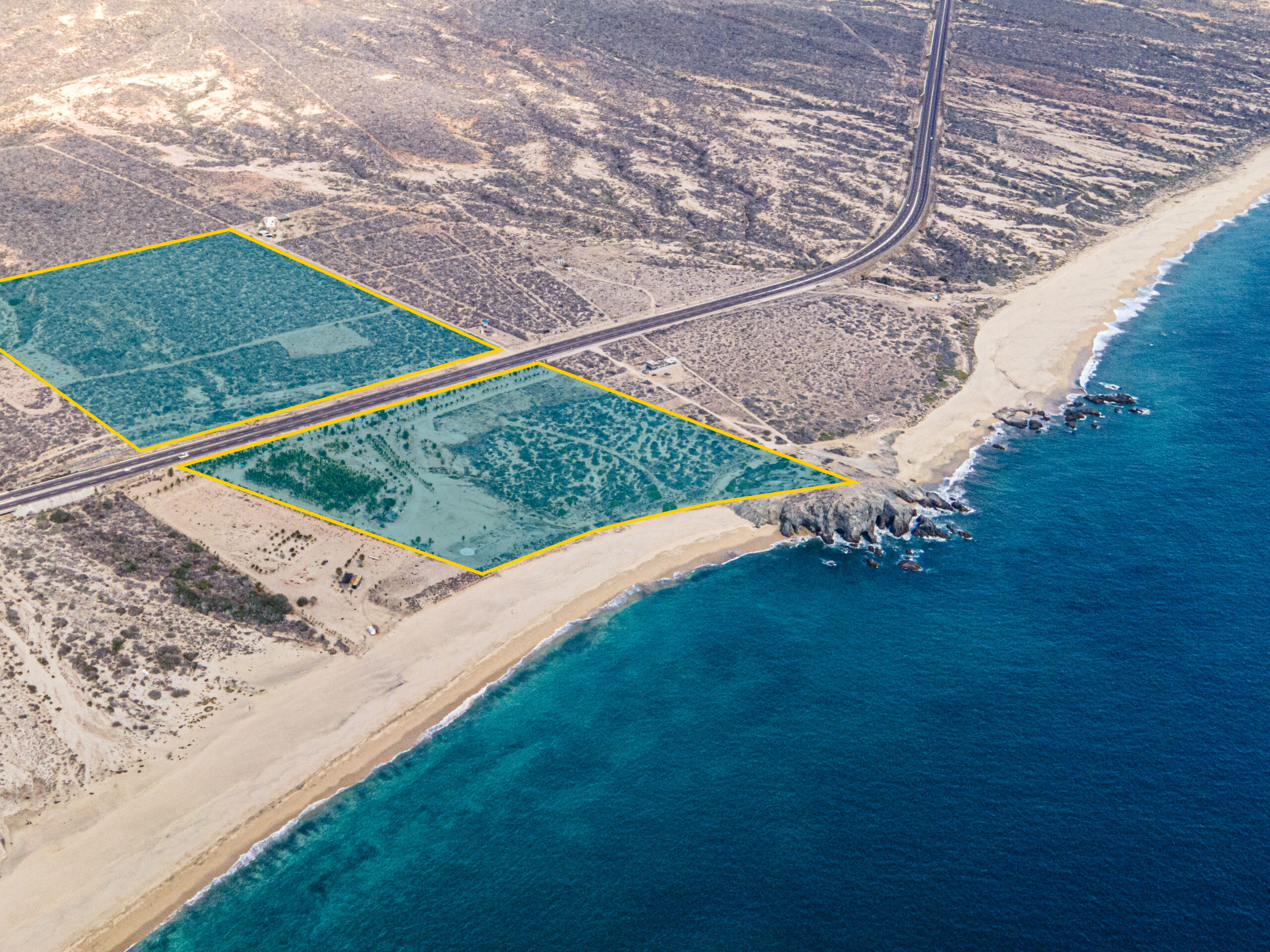
Strategic Land Categories That Actually Perform
High-Density Residential Parcels
Located near urban nodes such as La Paz or the periphery of Cabo, these parcels can support vertical or clustered residential product. Their value lies in optionality: condo development, branded residential concepts, or resale after entitlements improve.
Commercial and Mixed-Use Land
Land with highway frontage or direct proximity to infrastructure can become suitable for retail, hospitality, and service-oriented hubs. Accessibility and traffic flow become the principal value drivers.
Coastal and View-Oriented Land
Premium land with ocean views or direct frontage commands long-term pricing power because it cannot be replicated. These parcels are commonly repositioned for boutique hospitality, branded concepts, or ultra-luxury residential compounds.
Land Banking Strategy
Land banking in Baja typically means acquiring ahead of zoning upgrades or infrastructure expansion, holding with minimal improvements, and exiting later through resale, joint venture participation, or phased development.
The highest-performing land investors in Baja do not wait for certainty.
They position themselves before infrastructure, zoning clarity, and buyer demand fully converge.
Critical Variables That Define Success
Zoning and Land Use
Zoning determines density, height allowances, and viable product type. Misreading municipal plans or assuming entitlement flexibility without confirmation is one of the most common causes of capital loss in land deals.
Infrastructure Readiness
Water access, electricity, and road connectivity are not secondary details in Baja. In many cases, they are the core determinants of feasibility. A parcel that appears attractive in theory can become impaired if infrastructure timing is misunderstood.
Legal Structure
Ownership structure, title clarity, and the appropriate legal vehicle—including fideicomiso where applicable—must be evaluated carefully. Long-term security in land investment depends not only on location, but on enforceable control.
Growth Corridors to Watch
Todos Santos
Todos Santos continues transitioning from a pure lifestyle destination into a more structured investment market. Inventory remains constrained while hospitality presence continues to increase, supporting long-term land value.
La Paz
La Paz is emerging as one of the most balanced markets in Baja California Sur, with stronger infrastructure conditions and a rising appeal for long-term residential demand. For strategic land buyers, it represents a corridor where usability and growth are increasingly aligned.
Investment Framework Used by Sophisticated Buyers
Acquisition
Target land that is mispriced due to lack of infrastructure, entitlement friction, or limited immediate market visibility.
De-Risking
Secure zoning clarity and advance permits wherever possible to reduce uncertainty and improve future marketability.
Value Creation
Reposition the parcel as a development-ready or institutional-grade asset rather than simply raw land.
Exit
Exit through resale to developers, joint venture structures, or phased development depending on capital structure and timing objectives.
What Most Investors Get Wrong
- Overpaying for fully ready land and leaving no strategic upside
- Underestimating water constraints and infrastructure timing
- Ignoring zoning interpretation and planning timelines
- Treating Baja California Sur as a homogeneous market instead of a set of very different submarkets
Strategic Takeaway
Strategic land acquisition in Baja California Sur is about controlling optionality.
The highest-performing investors are those who position themselves ahead of infrastructure, zoning clarity, and demand convergence.
In this market, value is rarely created once everything is obvious.
It is created at the land acquisition stage.
Frequently Asked Questions
Is land in Baja California Sur a good investment?
Yes, when acquired strategically in growth corridors with clear zoning direction and future infrastructure potential. The strongest opportunities usually come from early positioning rather than buying fully mature land.
What is land banking?
Land banking is the strategy of acquiring land early, holding it through value-creation phases, and exiting once infrastructure, entitlement clarity, and demand improve.
What is the biggest risk in land investment?
The biggest risk is misunderstanding feasibility—especially zoning, water access, legal structure, and infrastructure timing. A parcel may appear attractive visually, but the real investment case depends on what can actually be done with it.