
Investing in Mexico’s thriving hospitality sector offers opportunities for foreign buyers. With tourism booming, buying a hotel in Mexico as a foreigner can be an attractive venture for international investors.
However, real estate in Mexico requires understanding specific legal frameworks, especially those related to foreign ownership restrictions in Mexico and the Mexican Foreign Investment Law. This guide walks you through the essential steps and considerations for acquiring a hotel property in Mexico.
Understanding foreign ownership of commercial property in Mexico
Mexico maintains one of the most open economies for foreign direct investment, particularly in the tourism sector. The country’s Foreign Investment Law provides a welcoming framework for Mexican hotel investment, while maintaining certain restrictions in what’s known as the Restricted Zone in Mexico.
Foreign investors can legally pursue commercial property acquisition in Mexico, including hotels, throughout most of the country. However, within Restricted Zones, foreigners must invest through a fideicomiso or a Mexican corporation for foreigners.
These regulations don’t prevent ownership entirely but require specific legal structures to ensure compliance with Mexican law.
Mexico’s growing tourism investment appeal
Baja California Sur has emerged as a powerhouse for tourism investment, capturing an impressive 36.2% of Mexico’s foreign direct investment in the sector. This amounts to $1.04 billion, outpacing even popular Quintana Roo, which received $787 million (27.4% of the total) in recent years, according to the Gringo Gazette.
Legal structures for hotel acquisition in Mexico
Foreign investors have two primary options for purchasing hotel properties in Mexico. Each structure offers different advantages depending on your investment goals and the property’s location.
The fideicomiso (bank trust) option
The fideicomiso is a bank trust specifically designed to allow foreigners to invest in Mexico’s restricted zones. This legal instrument enables foreign investors to purchase property while complying with constitutional restrictions.
Under this arrangement, a Mexican bank holds the legal title to the property, while you, as the foreign investor, retain all ownership rights and benefits. You can sell, lease, renovate, or pass the property to heirs without limitation.
The trust has a renewable term of 50 years and requires payment of setup fees and annual maintenance fees to the bank. For hotel investors, this option works well for smaller properties or individual ownership structures.
Creating a Mexican Corporation
Establishing a Mexican corporation offers another pathway to hotel ownership, particularly advantageous for larger commercial properties. This approach allows direct ownership of the hotel property, even in restricted zones.
A Mexican corporation can be 100% foreign-owned while still complying with Mexican law for commercial property acquisition. This structure typically requires:
- Registration with Mexico’s Foreign Investment Registry
- Obtaining permits from the Ministry of Foreign Affairs
- Establishing a Mexican tax ID (RFC)
- Creating corporate bylaws that acknowledge Mexican sovereignty
For serious hotel investors, the corporate structure often provides greater operational flexibility and potential tax advantages compared to the fideicomiso option.
Navigating the restricted zone regulations
Mexico’s constitution establishes specific “restricted zones” where direct foreign ownership is limited. Understanding these boundaries is crucial when selecting a hotel property.
The restricted zones include:
- 50 kilometers (31 miles) from any coastline
- 100 kilometers (62 miles) from any national border
Many prime tourist destinations—including Cancun, Los Cabos, and Puerto Vallarta—fall within these restricted zones. However, this doesn’t prevent foreign investment; it simply requires using either a fideicomiso or a Mexican corporation.
Implications for Hotel Investors
For hotel properties within restricted zones, foreign investors must use one of the legal structures mentioned above. Properties outside these zones can be purchased directly by foreigners without these additional legal mechanisms.
When evaluating potential hotel acquisitions, working with experts who understand these geographical restrictions can save significant time and prevent legal complications.
Ronival Real Estate’s team of real estate specialists offers comprehensive guidance on navigating these restrictions, particularly in the booming Baja California Sur region.
Step-by-Step process for buying a hotel in Mexico
Property selection and due diligence in Mexico
Begin by thoroughly researching potential hotel properties. Consider factors like:
- Location and proximity to tourist attractions
- Current occupancy rates and revenue history
- Property condition and potential renovation needs
- Existing permits and licenses
- Environmental compliance
Due diligence is particularly critical when purchasing existing hotel operations. Verify all permits are current and transferable, and ensure there are no outstanding legal issues or liens against the property.
Legal documentation and contracts
Once you’ve selected a property, you’ll need to prepare and review several key documents:
- Purchase agreement (contrato de compraventa)
- Trust agreement (if using a fideicomiso)
- Corporate formation documents (if using a Mexican corporation)
- Property title search and verification
- Environmental compliance certificates
In cases where the hotel is being acquired through a Mexican corporation, permits must also be obtained from the Secretaría de Relaciones Exteriores (Mexican Foreign Affairs Ministry).
All contracts should be drafted in both Spanish and English, with the Spanish version being legally binding. Having a bilingual attorney review all documents is essential for protecting your investment.
Working with notaries and legal professionals
The mexican notary public role (notario público) is fundamental in real estate transactions. Unlike notaries in the US, Mexican notaries are highly trained legal professionals who verify and formalize property transfers. The notary will:
- Verify the legal status of the property
- Ensure all taxes are paid
- Prepare the final deed
- Register the transaction with the appropriate government offices
Working with experienced real estate attorneys alongside the notary provides additional protection. They can help navigate the complexities of foreign investment regulations and ensure all documentation meets legal requirements.
Closing the transaction
The closing process in Mexico differs from procedures in the US or Canada. Key steps include:
- Signing the final purchase agreement before the notary
- Paying the purchase price (typically via wire transfer)
- Paying applicable taxes and fees
- Receiving the public deed
- Registering the property with the Public Registry of Property
The entire process typically takes 30-60 days from signing the initial agreement to final registration.
Financial considerations for hotel investors
Financing options for foreign buyers
Financing a hotel purchase in Mexico presents different challenges than in North America. Options include:
- International banks with Mexican operations
- Mexican banks (though terms may be less favorable for foreigners)
- Seller financing arrangements
- Investment partnerships with Mexican nationals
Many foreign investors choose to finance their purchases through banks in their home countries using existing assets as collateral, as this often provides better terms than Mexican financing options.
Understanding taxes and fees
Hotel acquisition in Mexico involves several taxes and fees:
- Acquisition tax (2-4% of property value)
- Transfer fees (1-2%)
- Notary fees (1-1.5%)
- Registration fees (0.5-1%)
- Annual property tax (predial) – typically lower than in the US/Canada
- Value-added tax (IVA) of 16% on commercial transactions
Additionally, hotel operations will be subject to income tax, payroll taxes, and tourism taxes, and potentially capital gains tax in Mexico on commercial property when sold. These aspects require guidance from a tax advisor familiar with Mexican hospitality regulations.
Operating a hotel business in Mexico
Permits and licenses
Running a hotel in Mexico requires obtaining and maintaining various permits:
- Hotel operating permits in Mexico
- Health department permits
- Fire safety certification
- Environmental permits
- Alcohol licenses (if applicable)
- Tourism registry with SECTUR (Secretary of Tourism)
Employment regulations
Mexican labor laws provide strong protections for workers. Key considerations include:
- Mandatory benefits (aguinaldo, vacation premium, profit sharing)
- Termination regulations and severance requirements
- Work schedules and overtime provisions
- Union considerations
Hotel operators must carefully comply with these regulations to avoid costly labor disputes. Many foreign investors partner with local management companies familiar with Mexican employment practices.
Case study: Cabo San Lucas, hotel market
Cabo San Lucas exemplifies the potential of hotel investment in Mexico’s restricted zones. This popular destination in Baja California Sur has seen tremendous growth in luxury hospitality.
For investors considering this market, Ronival Real Estate offers comprehensive services including property identification, due diligence support, and ongoing management services. Their local expertise in Baja California Sur provides invaluable insights for navigating this competitive market.
Hotel Los Patios in Cabo San Lucas
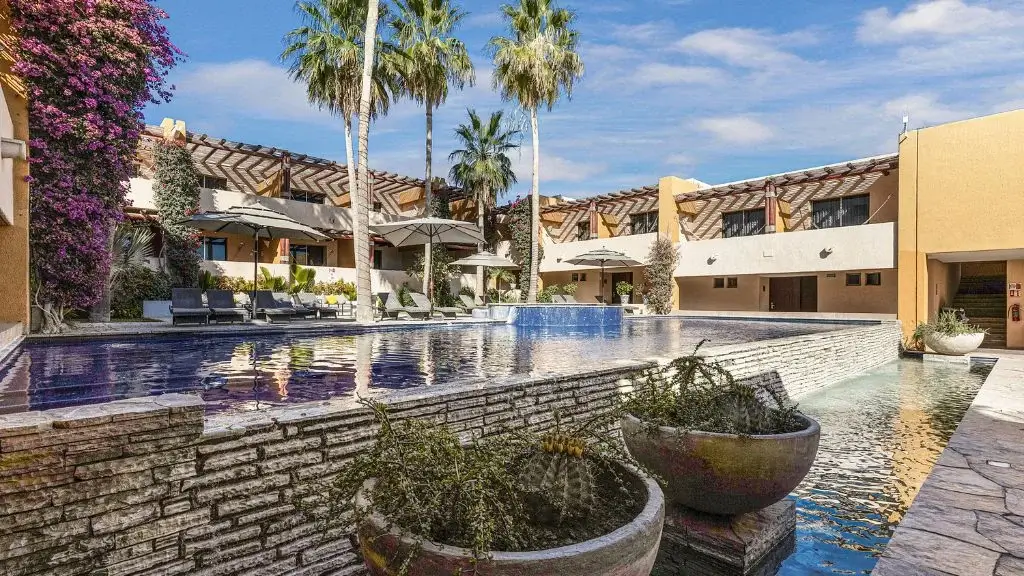
Hotel Los Patios in Cabo San Lucas represents an exceptional investment opportunity as a strategically located 4-star property featuring 76 rooms designed by acclaimed architect Jacinto Ávalos.
Positioned minutes from Cabo San Lucas Marina, this income-generating hotel benefits from a prime location near beaches, nightlife, and business districts, attracting both leisure and corporate travelers.
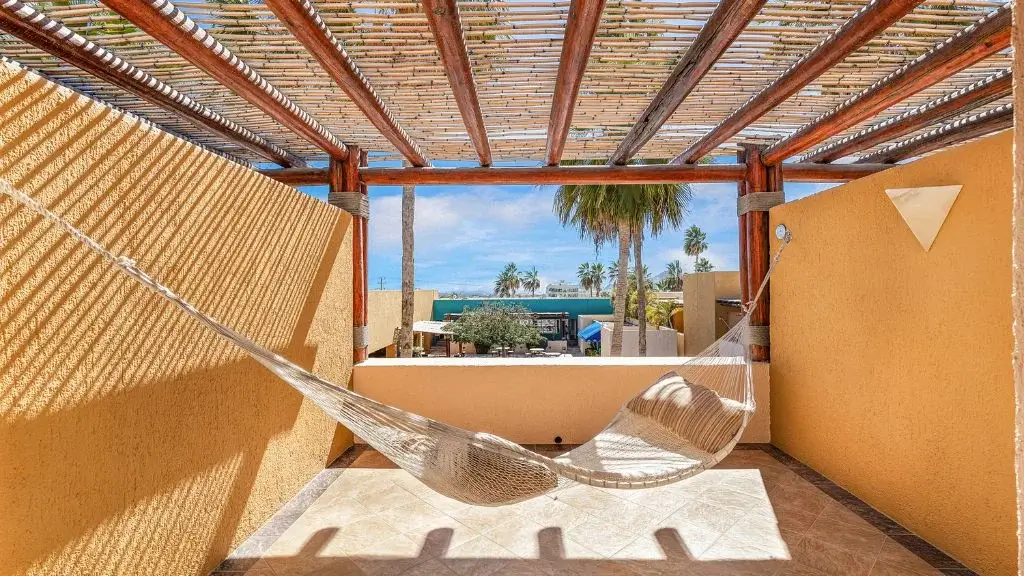
The property’s reinforced concrete construction ensures durability, while its spacious accommodations, modern amenities, and four ground-floor commercial spaces create competitive advantages in the market.
The hotel demonstrates strong financial performance with a $1,500 MXN average daily rate and 55% occupancy, generating 60% of bookings through direct channels to minimize third-party costs. Key investment highlights include:
- Location in Mexico’s fastest-growing luxury destination with stable, appreciating real estate values
- Government incentives for foreign investors and robust tourism demand (+4.6% domestic air arrivals)
- 38% surge in corporate event inquiries despite regional occupancy fluctuations
- Repositioning potential as a boutique or all-inclusive property with expansion opportunities (rooftop bars, spas, eco-friendly upgrades)
- Minimal operational debt and diversified revenue streams through rooms, events, and F&B operations
- Scalability through franchising partnerships in Baja California Sur’s thriving tourism sector
Keys to successful hotel investment in Mexico
Purchasing a hotel in Mexico as a foreigner requires careful navigation of legal structures, thorough due diligence, and proper operational planning. The key factors for success include:
- Choosing the appropriate ownership structure (fideicomiso or Mexican corporation)
- Working with experienced legal professionals familiar with foreign investment
- Conducting comprehensive due diligence on property and operations
- Understanding tax implications and planning accordingly
- Establishing proper management systems for ongoing operations
By partnering with established experts in Mexican real estate and hospitality management, foreign investors can successfully navigate the process of hotel acquisition and create profitable ventures in Mexico’s thriving tourism sector.
Ready to invest in Mexico’s booming hospitality market? Contact our expert team at Ronival Real Estate for your hotel acquisition with confidence and maximize your investment potential.