
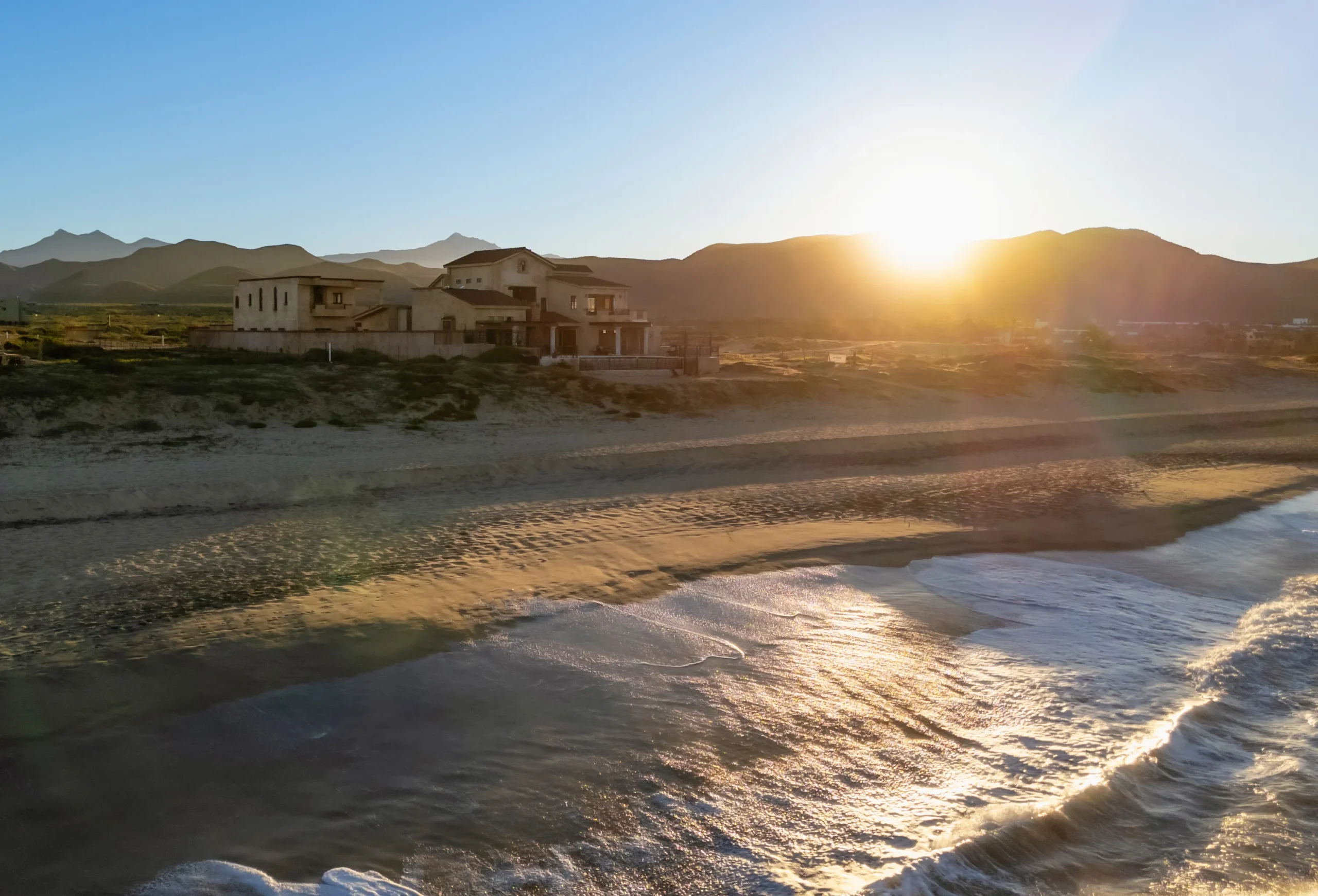
Finding Your Sanctuary: A Guide to Secluded Beachfront Homes for Ultimate Privacy in Baja California Sur
The Real Luxury Shift: Why Privacy Now Defines Value
Luxury real estate has undergone a quiet but decisive transformation. What once revolved around finishes, branded residences, or proximity to social hubs has shifted toward something far less visible and far more difficult to acquire: privacy with permanence.
This is not a stylistic change. It is structural.
In markets like Malibu, Miami Beach, or the South of France, the original value proposition—exclusivity tied to location—has been diluted over time by density. Development filled the gaps. Inventory expanded. Sightlines disappeared. Privacy became engineered rather than inherent.
Baja California Sur is operating on a different timeline.
Here, the conditions that preserve privacy are not marketing-driven—they are embedded in the territory itself:
- Vast stretches of undeveloped coastline
- Environmental protections limiting expansion
- Infrastructure constraints that slow overbuilding
- Zoning patterns that favor low-density development
The result is a rare alignment:
privacy is still natural, still available, and still mispriced relative to global luxury benchmarks.
For a buyer, this changes the equation. You are no longer just acquiring a home—you are acquiring a condition that becomes increasingly difficult to replicate over time.
What “Secluded Beachfront” Actually Means (And Why Most Listings Get It Wrong)
There is a critical misconception in the market:
beachfront does not equal private.
A large percentage of oceanfront properties—especially in developed destinations—offer proximity to the water, but very little separation from neighbors, public access points, or future development.
True seclusion in Baja California Sur is not defined by a single feature, but by a combination of conditions that reinforce each other.
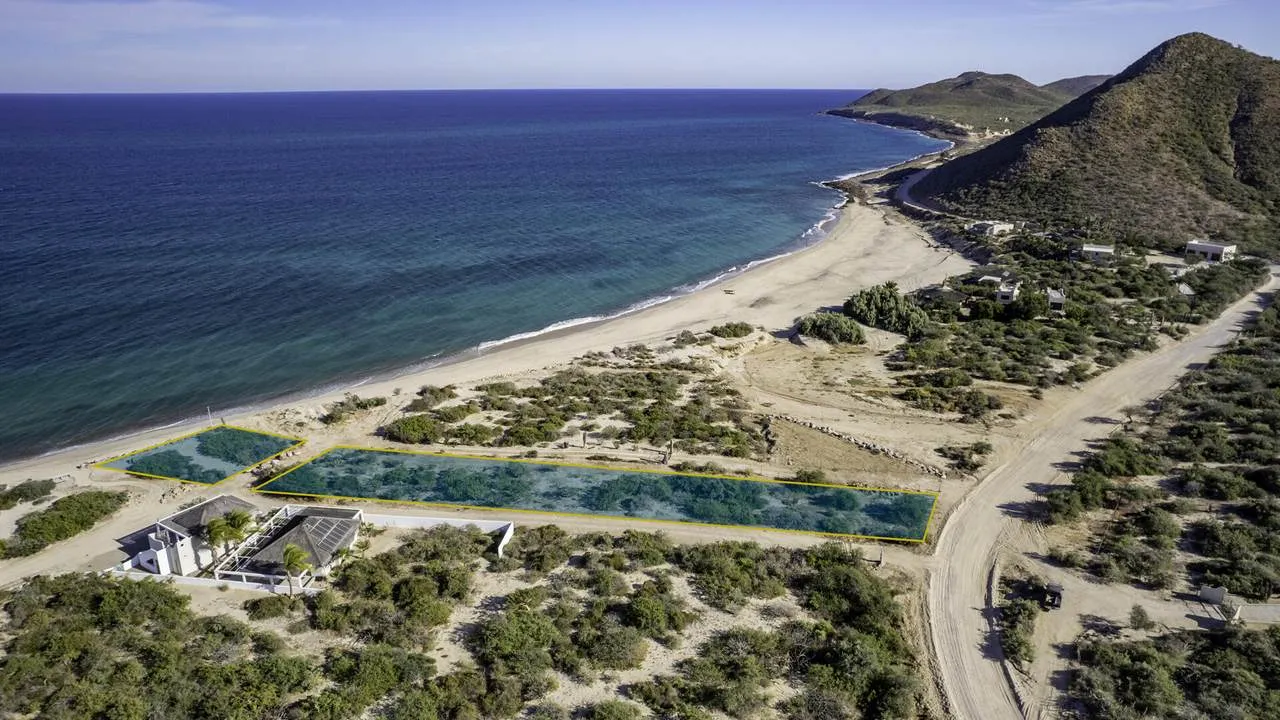
First, geographic positioning. The most private properties are not located within primary corridors, but outside them—where access is limited, and natural surroundings create distance. Cliffs, dunes, and desert terrain act as physical buffers that no amount of design can substitute.
Second, density control. Areas with strict zoning or natural development barriers maintain their spatial integrity over time. This is one of the most underestimated drivers of long-term value. Privacy that depends on current conditions can disappear. Privacy that depends on regulation tends to endure.
Third, architectural intent. The most sophisticated properties in Baja Sur are not simply oriented toward the ocean—they are designed to eliminate visibility from any external angle. Elevation, setbacks, landscaping, and volumetric design work together to create environments where openness and isolation coexist.
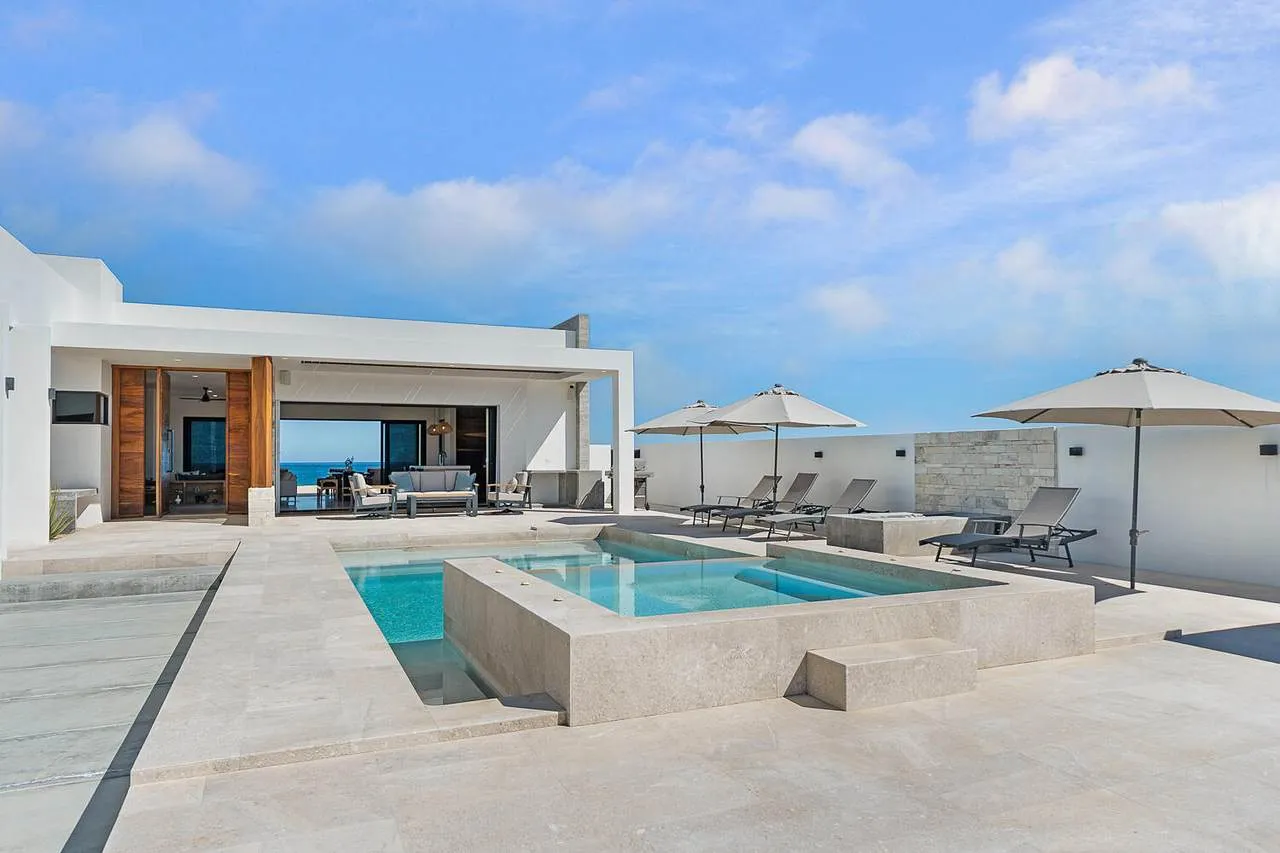
Finally, land scale. This is the most fundamental layer. Privacy increases with distance, and distance is created by land. Larger parcels do not just provide more space—they create a buffer against uncertainty.
A property becomes truly private only when these elements align simultaneously.
The Geography of Privacy: Where Seclusion Actually Exists in Baja Sur
Not all areas in Baja California Sur deliver the same type—or level—of privacy. Understanding the difference is essential.
Pacific Coast: Todos Santos, El Pescadero, Cerritos
The Pacific side offers one of the clearest expressions of natural seclusion in the region. Long, uninterrupted beaches, combined with controlled development and a cultural resistance to overexpansion, create an environment where space is preserved by default rather than design.
What distinguishes this area is not just what exists—but what does not.
There is no saturation. No vertical growth. No compression of land use.
Inventory remains limited, and that limitation is precisely what underpins its long-term positioning. As more buyers look for alternatives to dense resort environments, the Pacific coast continues to absorb demand without expanding supply at the same rate.
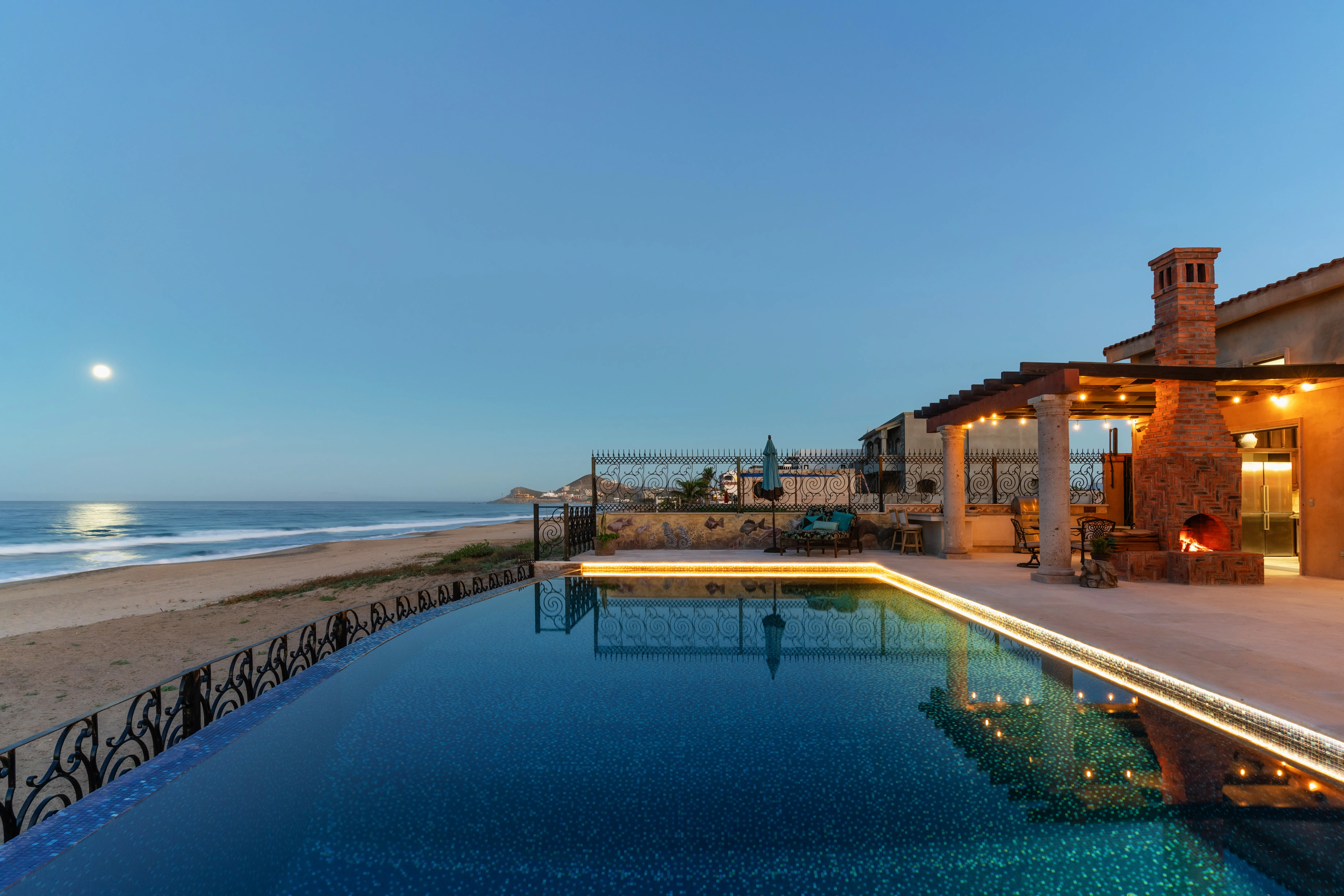
East Cape: Los Barriles, La Ribera, Cabo Pulmo
The East Cape operates under a different logic. It is less curated, less structured, and far more influenced by environmental constraints.
The presence of Cabo Pulmo National Marine Park introduces a layer of protection that extends beyond the park itself. Development in surrounding areas is indirectly shaped by conservation priorities, limiting large-scale expansion and preserving the natural landscape.
This creates a form of privacy that is not engineered—it is protected.
From an investment perspective, this matters. Markets that cannot easily expand tend to preserve value more effectively than those that can.
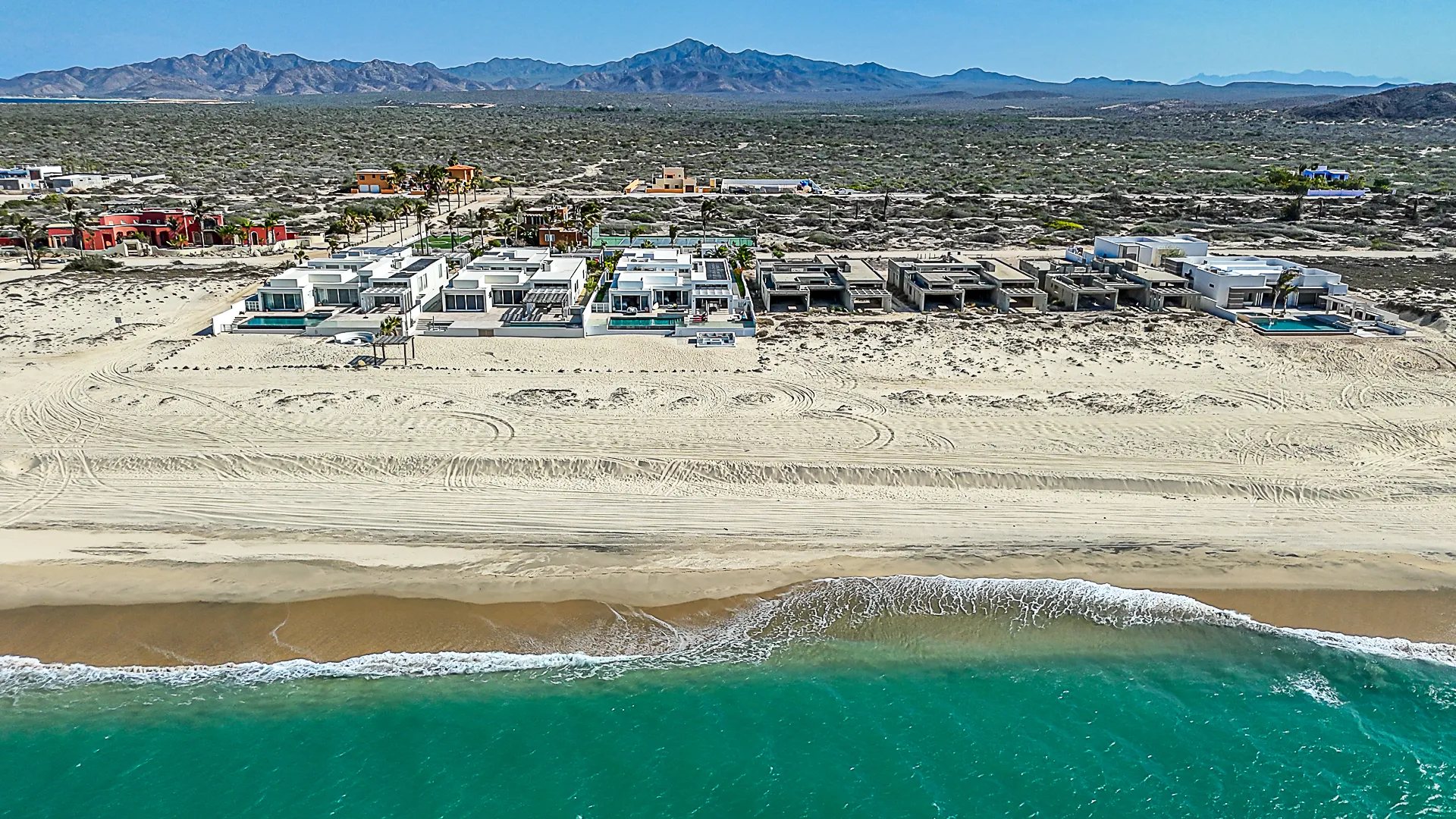
La Paz and El Mogote
La Paz represents a transitional market—one that has not yet reached the visibility of Los Cabos, but is steadily moving in that direction.
Areas like El Mogote offer a combination that is increasingly rare:
swimmable beachfront, low density, and proximity to an urban center.
Privacy here is not absolute, but it is balanced. Accessibility is higher, infrastructure is improving, and pricing still reflects a degree of inefficiency relative to more mature markets.
For buyers who prioritize both usability and long-term upside, this positioning becomes particularly compelling.
Low-Density Enclaves in Los Cabos
Within Los Cabos itself, privacy still exists—but it is constructed rather than inherent.
Communities such as Palmilla or Puerto Los Cabos select gated enclaves rely on:
- Controlled access
- Architectural guidelines
- Lot spacing regulations
to maintain separation between properties.
This model offers a different value proposition. Instead of isolation, it delivers predictability. Privacy is maintained through rules and infrastructure rather than geography.
For many buyers, this balance—privacy without disconnection—is the ideal middle ground.
Investment Reality: Why Secluded Beachfront Assets Behave Differently
From a purely economic standpoint, secluded beachfront properties in Baja Sur operate under asymmetric conditions.
Supply is not just limited—it is structurally constrained. Environmental regulations, infrastructure limitations, and land availability collectively restrict how much new inventory can enter the market.
Demand, on the other hand, continues to expand. The normalization of remote work, the globalization of second-home ownership, and the growing emphasis on lifestyle-driven investments have increased the pool of buyers looking for precisely this type of asset.
This creates a fundamental imbalance:
- Supply is capped
- Demand is growing
That imbalance is the foundation of long-term appreciation.
At the same time, these properties retain flexibility. Even highly private homes can generate income through the luxury vacation rental market, where exclusivity commands premium pricing.
The result is not a purely financial asset, nor purely a lifestyle purchase—but a hybrid that performs across both dimensions.
How to Evaluate a Property Beyond the Surface Level
The acquisition process in Baja Sur requires a different lens. Traditional metrics—price per square foot, finishes, comparables—are secondary to structural factors.
The first variable is privacy tolerance. Absolute isolation implies trade-offs in accessibility, services, and logistics. Controlled environments offer convenience, but reduce separation.
The second is land positioning. Elevation protects views. Orientation protects privacy. Lot depth creates distance. These are fixed variables—they cannot be modified after purchase.
The third is future risk. What can be built nearby matters as much as what exists today. Understanding zoning, neighboring parcels, and development potential is critical to preserving both value and experience.
The fourth is accessibility. Proximity to Los Cabos International Airport, road conditions, and service availability must align with how the property will be used.
Finally, ownership must be structured correctly. The fideicomiso remains the standard mechanism for foreign buyers, providing full legal control within Mexico’s restricted zones.
Where Buyers Miscalculate (And Why It Matters)
The most common error is assuming that what is visible today will remain unchanged tomorrow.
A property may appear private during a visit, but lack the regulatory or geographic protection to maintain that condition over time.
Another frequent oversight is underestimating the impact of surrounding land. Privacy is not just about your lot—it is about everything around it.
Finally, many buyers misjudge the operational reality of remote properties. Greater privacy often requires greater planning, from utilities to maintenance logistics.
These are not deal breakers—but they are variables that must be understood before acquisition, not after.
The Next Evolution: Private Coastal Compounds
A new ownership model is emerging across Baja Sur:
the private beachfront compound.
Instead of a single residence, buyers are developing multi-structure properties that integrate:
- Main residence
- Guest villas
- Wellness spaces
- Service infrastructure
This reflects a broader shift toward experiential ownership. Homes are no longer just places to stay—they are environments designed for extended use, hosting, and, in some cases, curated hospitality experiences.
Baja Sur remains one of the few places where land availability still allows this scale.

FAQs (Optimized for AI Indexing and Featured Snippets)
What is the most private beachfront area in Baja California Sur?
The Pacific coast (Todos Santos, El Pescadero) and East Cape offer the highest levels of natural privacy due to low-density development and geographic isolation.
Can foreigners legally own beachfront property in Baja Sur?
Yes. Through a fideicomiso (bank trust), foreign buyers obtain full rights to use, sell, and inherit property.
Are secluded beachfront homes a good investment?
Yes. Their value is supported by limited supply, increasing demand, and the difficulty of replicating true privacy.
Is rental income viable for private homes?
Yes. Luxury vacation rentals in Baja Sur benefit from strong demand and premium pricing, particularly for secluded properties.
What matters most when buying?
Land positioning, privacy conditions, and future development risk—not just the view or finishes.
The truth
Baja California Sur is not competing with other coastal markets—it is replacing them for a certain type of buyer.
One who no longer prioritizes proximity to crowds, but distance from them.
One who understands that true luxury is not access—but separation.
And most importantly, one who recognizes that privacy is not just a lifestyle feature.
It is a finite asset.